The industrial automation is an evolving industry with innovated products and solutions to meet the demands of digital era we are entering but with this enters new cyber security risk. Cyber attacks can lead to not just a financial loss but also serious safety incidents. Protecting control systems requires a great understanding on the challenges that are involved.
Industrial Cybersecurity vs. IT Security: What’s the Difference?
Industrial Cybersecurity (often referred to as OT, or Operational Technology, security) is the practice of protecting the hardware, software, and networks that control physical equipment and industrial processes. Think of power grids, water treatment plants, manufacturing assembly lines, and oil refineries.
While IT security focuses on protecting data (keeping emails, financial records, and intellectual property safe), Industrial Cybersecurity focuses on protecting physical actions and safety (preventing a valve from blowing up, keeping the electricity on, or ensuring a robotic arm doesn't malfunction).
The importance in cybersecurity within your industrial applications.
 Engineers within the industrial automation industry find that their biggest challenge is the widespread reliance on legacy systems that lack modern security features, which can enable vulnerable attacks. By having these outdated systems are deeply integrated into operations, that make patches and updates more complex and costly. Engineers often see necessary updates delayed preventing any downtime or disruptions.
As the digital era is expanding and evolving, we are seeing more Industrial automation manufacturers integrate Industrial Internet of Things (IIoT) within their products and solutions. Whilst this improves the overall efficiency, data collection and remote capabilities, but this enhances the risk of attacks, this is due to each connected device becomes a possible entry point. Implementing security within control systems is paramount in protecting both data protection and human safety.
Cyberattacks can also be physical. Unauthorised access to control systems can compromise system reliability and industrial cybersecurity. If unauthorised personnel gain physical access, they may tamper with or sabotage processes, causing significant disruption. They may also alter sensor data or damage network cables, allowing attackers to bypass security measures.
Industrial Automation Cybersecurity solutions
-
Identity and Access Management (IAM)
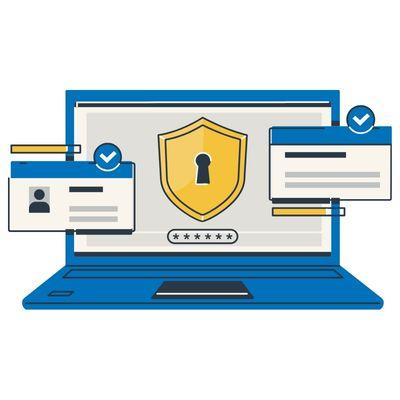
Identity and Access Management (IAM) is crucial for controlling who can access sensitive information and critical operational systems. Without robust IAM solutions, unauthorised users may gain access to essential data, leading to severe security breaches.
A highly effective way to secure your applications and industrial systems is by deploying a Multi-Factor Authentication (MFA) solution. Implementing MFA significantly reduces the risk of unauthorised access by requiring users to provide two or more verification factors before entry is granted.
-
Network 
Network separation is a crucial strategy in industrial automation cybersecurity. By implementing this approach, businesses can restrict the movement of threats across systems by dividing the network into smaller, isolated segments. Firewalls are highly effective at creating this segmentation, controlling traffic flow between zones by ensuring that only authorised data is allowed to pass through.
-
Third -party Access Control
Third-party access to industrial systems introduces significant cybersecurity risks, particularly as vendors and contractors require remote connectivity for maintenance, troubleshooting, and updates. If left unsecured, these access points can expose critical operational technology (OT), creating vulnerabilities that attackers can exploit to breach the wider network. Consequently, robust remote access solutions are vital to safeguard infrastructure.
To mitigate this exposure, organisations must conduct thorough security assessments for all third-party partners—evaluating their encryption standards, access controls, and incident response protocols. These requirements should be legally reinforced through clearly defined service level agreements (SLAs), which hold vendors accountable to strict security benchmarks and protect vital infrastructure from potential breaches.
What are the top cyber threats to industrial networks today?
What are the most common cyber threats facing industrial automation systems?
|
|
What are the essential security controls for industrial networks?
|
|
Industrial automation is increasingly targeted by malware, ransomware, phishing campaigns, insider threats, and supply chain vulnerabilities. Legacy software, unpatched systems, and insecure remote access routinely expose Industrial Control Systems (ICS) to operational disruption, data manipulation, or even physical damage.
|
|
Robust industrial security relies on network segmentation, multi-factor authentication (MFA), rigorous patch management, and data encryption. Deploying industrial firewalls, Intrusion Detection Systems (IDS), and continuous anomaly monitoring will help isolate threats, whilst regular offline backups ensure rapid recovery.
|
How do I assess cybersecurity risks in an industrial environment?
|
|
What are the most common cyber threats facing industrial automation systems?
|
|
Begin by mapping out your critical assets, network vulnerabilities, and potential threat vectors. Regular risk assessments—including formal penetration testing—are essential. To mitigate identified risks, you should segment your IT/OT networks, enforce strict access controls, continuously monitor for anomalies, and align your strategy with international standards like IEC 62443.
|
|
Industrial automation is increasingly targeted by malware, ransomware, phishing campaigns, insider threats, and supply chain vulnerabilities. Legacy software, unpatched systems, and insecure remote access routinely expose Industrial Control Systems (ICS) to operational disruption, data manipulation, or even physical damage.
|
Protect your critical systems. Get in touch with our sales team to strengthen your application cybersecurity.