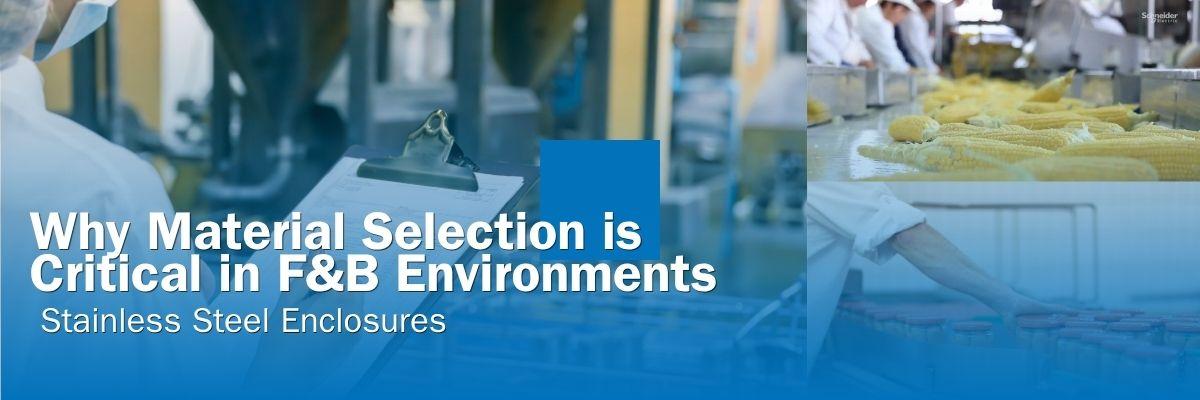
Hidden Risk in Your Facility
Food & Beverage production environments are amongst the most demanding industrial settings. Equipment is subjected daily to:
- High-pressure washdowns
- Aggressive chemical cleaning agents
- Extreme temperature fluctuations
- Continuous exposure to moisture and organic matter
These are not just operational challenges, they are risks!
One factor is often underestimated: material selection
Choosing the wrong enclosure doesn't just reduce lifespan, it directly compromises food safety!
This is why stainless-steel enclosures are not a preference—they’re a necessity.
 Material Choice is Non-Negotiable
Why Stainless Steel is the Industry Standard?
1. Hygienic by Design
In Food & Beverage production, maintaining hygienic conditions is critical both for safety and compliance.
Stainless steel offers:
- Smooth surfaces that are easy to clean
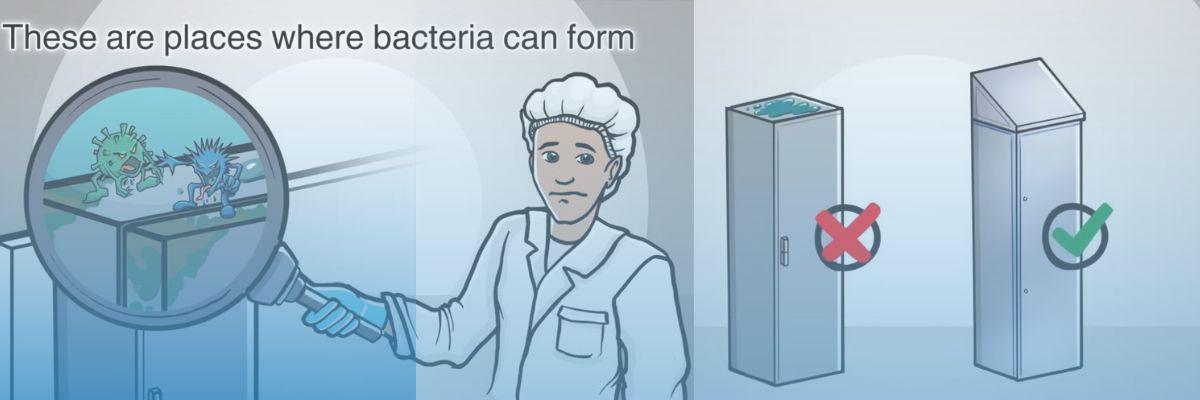
- Excellent wipe ability, reducing bacterial retention
- Resistance to staining and contamination
Unlike painted or coated materials, stainless steel does not chip or degrade so it doesn't degrade and expose underlying surfaces to contamination.
2. Superior Corrosion Resistance
Food & Beverage environments involve regular exposure to:
- Acidic substances
- Alkaline cleaning supplies and disinfectants
- Lower-grade materials can corrode quickly under these conditions = Bacterial traps
Stainless steel grades matter:
Grade 304 – Reliable corrosion resistance for general applications
Grade 316L – Enhanced resistance, ideal for highly corrosive or hygienic environments

3. Built for Durability
Stainless steel enclosures are engineered to perform in demanding environments where other materials fail
They provide:
- High resistance to impact and wear
- Extended lifespan even with frequent washdowns
- Stability under thermal stress
Resulting in reduced maintenance, less replacements and improved operational uptime.
IP Ratings – Protection
Ingress Protection ratings indicate how well an enclosure resists dust and water ingress.
For stainless steel enclosures in F&B environments:
- IP65– Protection against water jets
- IP66– Protection against powerful washdowns
- IP67– Protection against temporary immersion
- IP69K– Designed for high-pressure, high-temperature cleaning (hygiene critical zones)
Our Stainless-Steel Enclosures
At CCA we offer a range of stainless-steel enclosures designed to meet the need of the Food & Beverage sector.
Our Suppliers:
Terminal Boxes:
- Compact stainless steel solutions for secure and hygienic connectivity in confined spaces
Wall-Mounted Enclosures:
- Ideal for saving space while protecting sensitive electrical components in washdown environments
Floor-Standing Cabinets:
- Robust stainless steel cabinets designed for large-scale control and power distribution systems
Hygienic Design Features That Matter
Material selection is not the only important part of the equation – effective design is just as important.
Our stainless-steel enclosures are engineered with features that enhance hygiene and performance, they include:
- Sloped roofs –Designed to prevent water build up and minimise contamination risks
- Blue silicone seals – High-visibility sealing for easier inspection and improved compliance with food safety standards
- Smooth welded seams – Remove crevices where bacteria could collect
- Optimised drainage design – Supports faster, more efficient cleaning and drying
These design elements help maintain strict hygiene standards while reducing maintenance effort
What Happens When You Don’t Use Stainless Steel?
Using non-stainless or lower-grade enclosures in F&B environments can lead to:
- Corrosion and rust formation – creating surfaces that promote bacteria growth
- Coating failure – Exposing materials that are not suitable for hygienic environments
- Seal degradation – Allowing water and contaminants to enter
- Increased downtime and costs – Frequent repairs or replacements
Poor material choice = compliance risks and compromised product safety
A Strategic Investment in Hygiene and Performance
Stainless steel enclosures are more than a protective housing – they are a critical component of your hygiene strategy.
Investing in the right stainless-steel enclosures, you have:
- Consistent compliance with food safety standards
- Long-term durability in harsh conditions
- Reduced maintenance and operational costs
- Protection of both equipment and product integrity
In the Food & Beverage industry, the right material choice isn’t optional – it’s essential!